
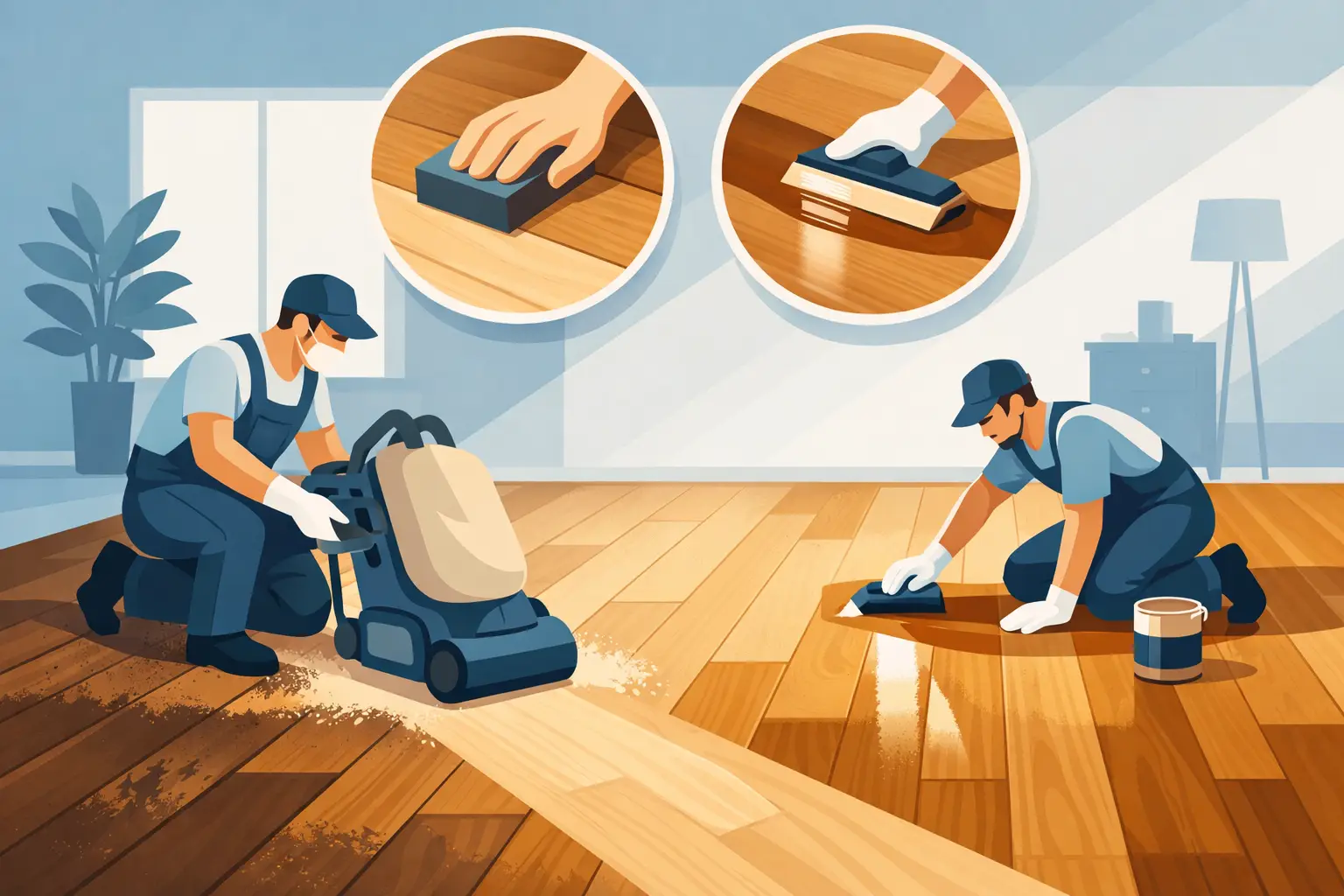
A hardwood floor can look tired long before it has reached the end of its life. Fine scratches near the kitchen, dull traffic paths in the hallway, fading by sunny windows, and a finish that no longer wipes clean are all signs that the protective surface has worn away. Professional wood floor refinishing services can bring that floor back to life without replacing the material that gives your home so much character.
For Southwest Florida homeowners, refinishing is also a practical investment. Sand, humidity, pet traffic, spilled drinks, and daily use can wear on a hardwood finish over time. The right refinishing process restores a smooth, even appearance while adding a durable layer of protection designed for how your household actually lives.
Refinishing Is More Than Making a Floor Look New
A beautiful result begins with a careful assessment, not a sander. Solid hardwood can usually be refinished several times over its lifespan, but the condition of the boards, the thickness of the wear layer, previous repairs, moisture exposure, and the type of existing finish all affect the plan. Engineered wood may also be refinished, though it depends on the thickness of its real-wood top layer.
Refinishing generally includes sanding away the worn finish, correcting surface-level imperfections, making needed repairs, applying a stain when desired, and building protection with a professional-grade finish. Each step has a visual purpose, but it also affects how well the floor performs after the crew leaves.
A floor that has been refinished with care should not simply look shinier. It should feel smooth underfoot, show consistent color from room to room, and have a finish chosen for the demands of the space. That attention is especially noticeable at transitions, around floor vents, along baseboards, and where the field of the floor meets stair treads or other detailed areas.
When Your Hardwood Floors Are Ready for Attention
Most homeowners first notice the finish, not the wood itself. A few isolated scratches may only call for a touch-up or a maintenance coat. Widespread dullness and wear are different. If water no longer beads on the floor, the finish has likely lost much of its protective ability.
Dark spots, gray areas, cupping, gaps, or boards that feel soft can point to moisture issues. Refinishing may still be part of the solution, but the source of moisture must be addressed first. Sanding over an active problem may improve appearance temporarily while allowing damage to continue below the surface.
Consider an evaluation when you see any of the following:
- A dull, uneven sheen across high-traffic areas
- Scratches that cut through the finish and expose bare wood
- Discoloration from rugs, sunlight, water, or old pet stains
- Roughness, splinters, or edges that catch when walking barefoot
- A dated stain color that no longer fits your home’s interior
Deep black water stains and extensive pet damage do not always sand out completely. In those cases, selective board replacement can create a much more balanced finished floor. A qualified flooring specialist will explain what can realistically be restored and where repair work is the better choice.
A Clean Process Matters Inside an Occupied Home
The thought of sanding floors often brings up memories of dust settling on furniture, cabinets, and every nearby surface. Modern dust-containment equipment changes that experience significantly. Dust-free sanding systems capture most airborne particles at the source, helping keep the work area cleaner and reducing disruption for families living through the project.
No active construction project is completely without dust, and a professional should be honest about that. Preparation still matters. Furniture must be moved or protected, access areas should be planned, and the crew should communicate clearly about which rooms will be unavailable and when. But a controlled sanding process is a major advantage over outdated methods that allow dust to travel throughout the home.
Cleanliness is not only about convenience. Better containment supports a more precise finish by keeping debris out of freshly prepared wood and newly applied coatings. It also reflects the level of care that should be standard when work is happening in a personal living space.
Choosing Color and Finish With the Whole Home in Mind
Refinishing gives homeowners an opportunity to keep the natural character of their wood or shift the look of an entire room. A clear finish can highlight oak, maple, hickory, or other species as they are. Custom staining can create a warmer, richer, lighter, or more contemporary direction.
Color selection should not happen from a small sample alone. The same stain can read differently depending on wood species, grain pattern, previous color, surrounding wall paint, window light, and the undertones of cabinetry or furnishings. Test areas are valuable because they show how the color will look on your actual floor, in your actual home.
The sheen level deserves equal consideration. Matte and satin finishes are popular for their understated appearance and their ability to make minor dust and footprints less noticeable. Semi-gloss provides more reflection and a more formal look, but it can reveal surface marks more readily. There is no single best choice. The right finish balances the design you want with the level of everyday maintenance you prefer.
For households concerned about indoor air quality and turnaround time, eco-friendly water-based finishes are often an excellent option. They typically have lower odor than traditional oil-based products, dry more quickly, and maintain a clear appearance over time. Oil-based finishes can offer warmth and a classic amber tone, particularly on certain wood species, but they generally require more drying time. A tailored recommendation should account for the look you want, your schedule, and how the space will be used.
Why Preparation and Detail Define the Result
Sanding is not a one-pass operation. Professional refinishing uses a progression of abrasives to remove the old coating while refining the wood surface without leaving visible machine marks. Edges, corners, closets, and stair components require separate attention because large sanding equipment cannot reach every area.
This is where craftsmanship becomes visible. Poor preparation can leave chatter marks, uneven stain absorption, rough edges, or lines that appear under certain light. Skilled technicians watch grain direction, inspect the floor between stages, and address repairs before the final finish makes every detail permanent.
Staircase refinishing requires particularly careful work. Treads and risers are highly visible, frequently touched, and subject to concentrated wear. Matching them to surrounding floors involves more than applying the same stain. Wood species, prior coatings, lighting, and the condition of each component can all affect the final color.
At Walnut Creek Wood Floors, the goal is not to make every floor look identical. It is to preserve the character of the wood while delivering a consistent, polished result that belongs in the home.
What to Expect From Professional Wood Floor Refinishing Services
A well-managed project should feel organized from the first conversation. Before work begins, homeowners should understand the scope, likely timeline, furniture plan, color choices, repair recommendations, and the period before the floors can be walked on or covered with rugs.
Drying time varies by finish, temperature, humidity, and number of coats. Floors may be ready for careful foot traffic relatively soon, while furniture, area rugs, and heavy use should wait longer. Rushing this stage can compromise a finish that was applied correctly, so following the recommended cure schedule is part of protecting the investment.
Once the floor is back in use, simple habits help preserve it. Use felt pads under furniture, place mats at exterior doors, clean up spills promptly, and avoid harsh cleaners or steam mops unless the finish manufacturer specifically approves them. Regular sweeping or vacuuming with a hard-floor attachment keeps abrasive grit from acting like sandpaper underfoot.
Refinishing vs. Replacing: A Decision Worth Making Carefully
If your boards are structurally sound, refinishing is often more cost-effective and less disruptive than full replacement. It allows you to retain the original hardwood, which may be wider, more distinctive, or better matched to the architecture of an older home than many new options.
Replacement becomes more appropriate when there is widespread rot, severe movement, extensive structural damage, or a floor that has already been sanded too many times. It can also make sense when a homeowner wants to change the width, species, or layout of the flooring altogether. The best decision is based on the floor in front of you, not a one-size-fits-all recommendation.
A carefully refinished hardwood floor rewards the investment every day: in the way sunlight catches the grain, in the clean continuity from room to room, and in the confidence of knowing the work was done with respect for your home. When wear begins to hide the beauty of the wood, a thoughtful professional assessment is the right place to start.
Leave a Reply