
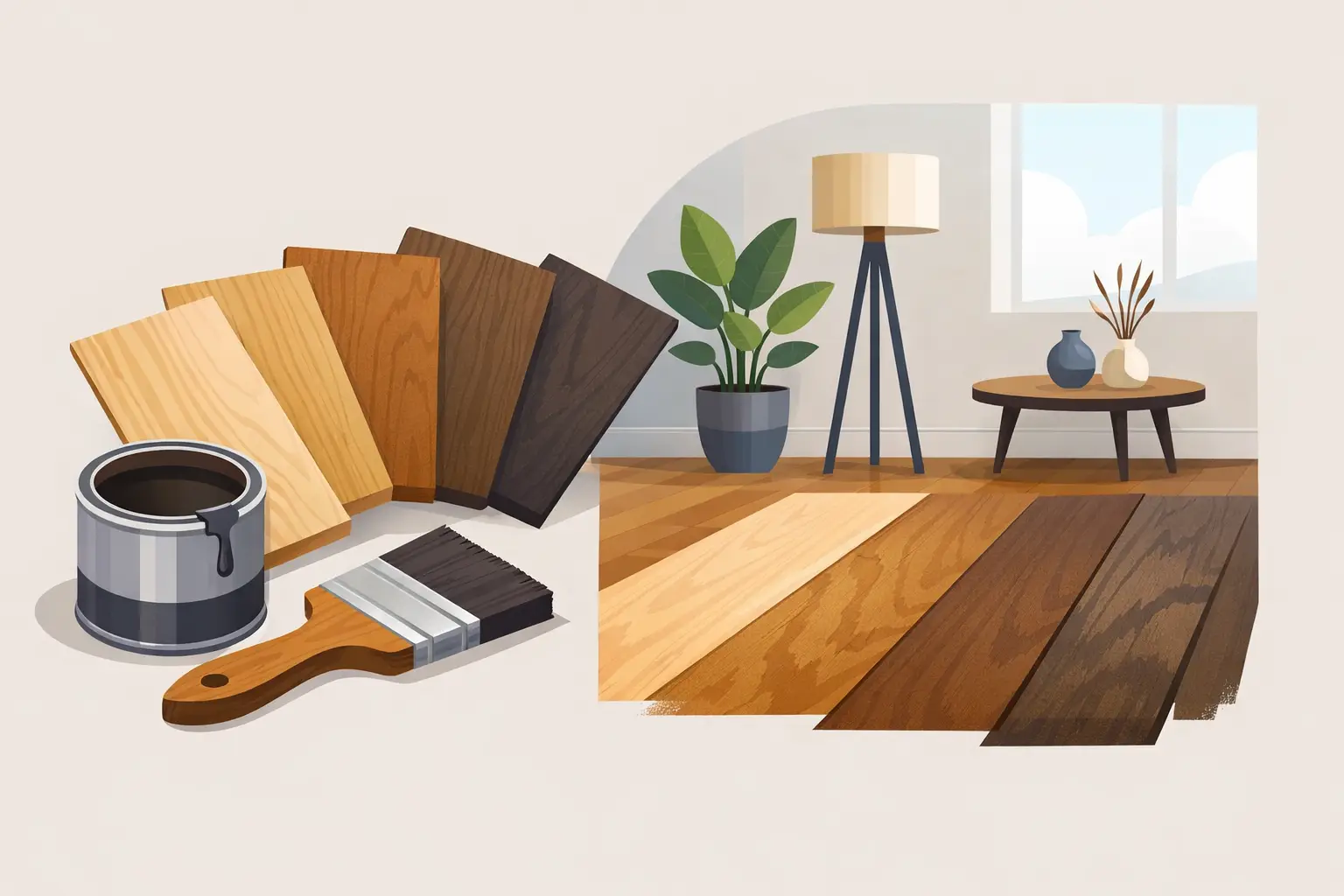
A floor can look technically perfect and still feel wrong once the color is on. That is usually the moment homeowners realize stain is not a small cosmetic choice. It sets the tone for the entire room, changes how wood grain reads in natural light, and can make surrounding finishes feel either intentional or out of place. That is why custom stain colors for hardwood floors deserve more than a quick pick from a sample board.
For homeowners investing in refinishing or new hardwood installation, the goal is rarely just darker or lighter. The real goal is a floor that belongs in the home, works with the architecture, and still looks right after furniture, paint, and everyday living settle back in. Reaching that result takes more than product knowledge. It takes testing, judgment, and a careful process.
Why custom stain colors for hardwood floors matter
Standard stain colors can be useful starting points, but they are not universal solutions. The same stain can look warm on one species, muddy on another, and much darker in a room with limited natural light. Even boards within the same floor can absorb color differently depending on age, grain pattern, and prior wear.
Custom staining gives you control where off-the-shelf color names fall short. Instead of forcing the floor to fit a preset tone, the color is adjusted to suit the wood, the home, and the finish level you want. That might mean softening red undertones in oak, warming up a cooler brown, or finding a middle ground between natural wood and a deeper modern tone.
This is especially important in homes with open layouts. Floors often run continuously through several rooms, so the stain has to work across changing light conditions and alongside multiple design elements. A custom approach helps prevent a color that looks perfect in one corner and too heavy in another.
What actually affects stain color
Homeowners are often surprised by how many variables shape the final result. Wood species is one of the biggest. White oak, red oak, maple, hickory, and pine each take stain differently. Red oak tends to show stronger warm undertones, while white oak often gives a more muted, contemporary base. Maple can be less predictable because of its dense grain, and older floors may carry variations from sun exposure or past finishes.
Sanding quality matters just as much as stain selection. If the floor is not prepared evenly, the stain can absorb inconsistently and leave visible variation that was never intended. This is one reason craftsmanship matters so much in refinishing work. The beauty of a stain color depends on the surface beneath it.
Lighting also changes perception. A medium brown may feel rich and balanced in daylight but read flat under warm interior lighting at night. In Southwest Florida homes, strong natural light can brighten floors during the day, while shaded interiors may pull the same stain in a different direction. That is why in-home testing is more reliable than choosing from small prefinished samples viewed in isolation.
Choosing a color that fits the home
The best stain choice is usually the one that creates continuity, not the one that grabs the most attention on its own. Floors cover a large visual area, so they need to support the overall design rather than compete with it.
In traditional homes, richer browns and warmer tones often complement cabinetry, millwork, and established furnishings. In more updated interiors, lighter or medium neutral stains can help spaces feel cleaner and more open. Neither direction is automatically better. It depends on ceiling height, wall color, wood species, and how formal or relaxed the home is meant to feel.
Older homes bring another layer of decision-making. Some homeowners want to preserve character and keep a classic look. Others want to refinish original wood with a more current tone while still respecting the home’s architecture. A custom stain can bridge that gap. It can update the appearance without making the floor feel disconnected from the rest of the house.
If you are trying to match existing hardwood in adjacent spaces, custom work becomes even more valuable. Exact matches are not always possible, especially with aged wood, but careful blending can often get much closer than standard stock colors.
The value of stain samples on your actual floor
This is where good decisions are made. A sample applied directly to your sanded floor tells the truth in a way a manufacturer card cannot. You can see how the color reacts to your wood, under your lighting, in the rooms where you will actually live with it.
A proper sampling process also helps narrow down subtle choices. Many homeowners are not deciding between blonde and espresso. They are deciding between two medium browns, one slightly warmer and one slightly cleaner. Those differences matter once the floor is finished wall to wall.
The smart approach is to compare a few targeted options, not dozens. Too many samples can make the decision harder and blur the distinctions. An experienced flooring professional should be able to guide that process, refine the direction, and explain what each option will likely look like once finish coats are applied.
Trade-offs to think through before you choose
Every stain direction comes with practical considerations. Darker floors can feel elegant and grounded, but they may show dust, pet hair, and fine scratches more readily. Lighter floors can create an airy look and often hide everyday debris better, but some very light tones may not suit every species or every home style.
Gray-toned stains have been popular in many markets, yet they can be tricky on certain woods. If the wood has strong natural warmth, forcing a cool result may create an artificial look. That does not mean cooler tones are off the table. It means they need to be handled with care and tested properly.
Natural or low-color finishes are another common request. They can be beautiful, especially when the wood itself has strong character. But natural does not always mean neutral. Some species pull yellow, pink, or amber unless the stain and finish system are chosen carefully.
Durability is part of the conversation too. Stain color alone does not determine wear performance, but the look you choose affects how wear is perceived over time. In busy family homes, the best result is often the one that balances design preference with how the space is actually used.
Process matters as much as color
A well-executed stain job is built on preparation, consistency, and finish quality. The floor needs to be sanded evenly, cleaned thoroughly, stained with control, and sealed with a finish system appropriate for the home. Rushing any of those steps can undermine the final appearance.
For occupied homes, cleanliness matters as well. Refinishing is much easier on families when the sanding process is managed with dust-control systems and careful site protection. Premium results are not only about the final color. They are also about how the work is carried out inside the home.
This is where experience shows. A professional who understands custom stain work is not just applying color. They are reading the wood, anticipating how it will respond, and adjusting the process to produce a consistent, refined finish. That attention to detail is often the difference between a floor that looks acceptable and one that looks truly considered.
When custom staining is worth it
Custom staining makes the most sense when the floor is a major design element, when standard stain options feel close but not right, or when you need to coordinate with existing features in the home. It is also worthwhile when restoring older hardwood that deserves a more thoughtful approach than a one-size-fits-all color.
For many homeowners, this is a long-term investment. Hardwood floors are not changed casually, and the stain you choose will influence the feel of the home every day. Taking the time to test, adjust, and refine the color is part of protecting that investment.
At Walnut Creek Wood Floors, that kind of work aligns with the way premium hardwood projects should be handled – with careful preparation, clear communication, and pride in the finished result.
The right stain color should not feel trendy for a season or acceptable by default. It should feel settled, intentional, and right for the home each time you walk through the door.
Leave a Reply