
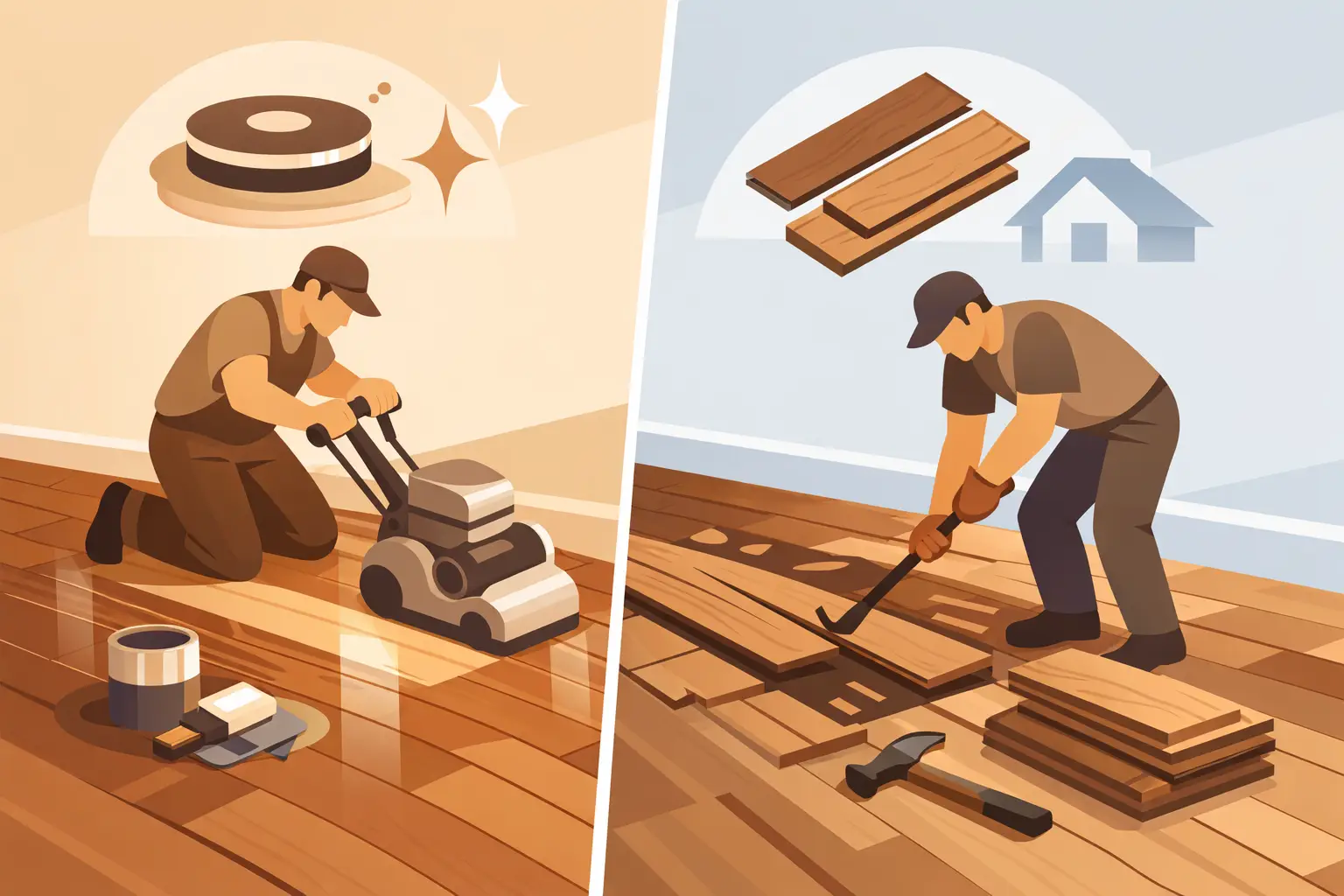
When a hardwood floor starts showing its age, the question usually is not whether to do something – it is whether that floor should be restored or removed. For many homeowners, hardwood floor refinishing vs replacement comes down to cost, condition, timeline, and how much change they want to make in the space.
That choice matters more than most people expect. A well-executed refinish can bring back warmth, character, and value while preserving the original floor. A full replacement, on the other hand, can solve deeper structural problems and create an entirely new look. The right answer depends on what is happening below the surface, not just what the floor looks like at first glance.
Hardwood floor refinishing vs replacement: what is the difference?
Refinishing keeps your existing wood floor in place. The floor is sanded to remove surface wear, scratches, dull finish, light staining, and minor imperfections. After sanding, the wood can be stained if desired and protected with a new finish.
Replacement means the old flooring is removed and new wood is installed. Sometimes that is a full tear-out. In other cases, only certain damaged sections are replaced, followed by sanding and finishing the entire floor for a more uniform result.
For homeowners, the practical distinction is simple. Refinishing restores what you already have. Replacement starts over.
When refinishing is the better investment
If the boards are structurally sound, refinishing is often the smarter option. Many floors look far worse than they actually are. Surface scratches, faded finish, pet wear, minor water marks, and color that feels dated can usually be corrected without replacing the floor itself.
This is especially true in older homes with solid hardwood. Those floors often have excellent material quality and can be refinished multiple times over their lifespan. Keeping them in place preserves character and avoids the expense and disruption of demolition.
Refinishing also makes sense when your goals are mostly aesthetic. If you like the layout of the flooring but want a cleaner, richer, or more current appearance, sanding and staining can make a dramatic difference. Going from a worn orange tone to a softer natural finish, or from dull traffic paths to an even satin sheen, can completely reset a room.
There is also a value consideration. In many cases, refinishing costs significantly less than full replacement because you are not paying for new material across the entire floor. You are investing in skilled restoration work rather than starting from scratch.
For occupied homes, process matters too. A professional dust-free refinishing approach can make the experience far cleaner and more manageable than many homeowners assume. That can be a major advantage for families who want beautiful results without turning the entire house into a construction zone.
When replacement is the right call
Some floors are simply beyond refinishing. Deep water damage, severe warping, widespread board failure, termite damage, rot, and unstable subfloor conditions usually point toward replacement. If the wood is compromised, sanding the surface will not correct the real problem.
Replacement is also often necessary when the floor has already been sanded too many times. Solid hardwood has a wear layer, and once too much material has been removed over the years, another sanding can put the tongue-and-groove structure at risk. Engineered wood can sometimes be refinished, but only if the top veneer is thick enough.
Design goals can push the decision toward replacement as well. If you want to change board width, species, grade, or overall layout, refinishing will not get you there. The same goes for homes where different additions or repairs have left the flooring mismatched and patchy beyond what blending can reasonably fix.
In those cases, replacement is not a luxury. It is the cleaner, longer-lasting solution.
The condition issues that matter most
Homeowners often focus on scratches because they are visible, but professionals look at a different set of questions first. Is the wood still solid? Are boards cupped, crowned, or loose? Is there moisture intrusion? Are there dark stains that indicate deeper water penetration? Can damaged areas be isolated and repaired, or is the issue widespread?
A floor can look rough and still be an excellent candidate for refinishing. Another floor can look acceptable from across the room while hiding structural or moisture-related damage that makes replacement necessary.
That is why inspection matters. The best decisions are made board by board, not based on online averages or guesswork.
Cost is important, but not by itself
For most homeowners, budget is part of the decision from the start. Refinishing is typically less expensive than replacing hardwood flooring, but cost should be considered alongside lifespan and result.
If refinishing can restore the floor for many more years, it usually offers strong value. If a floor has active damage and refinishing would only postpone a larger problem, spending less now can become more expensive later.
Replacement has a higher upfront cost because it includes demolition, material, installation, sanding, and finishing when unfinished wood is used. But if your current floor is failing or no longer fits the home, replacement may be the better investment.
The key is to compare complete outcomes, not just line-item pricing. A lower quote is not always a better answer if it does not address the actual condition of the floor.
Appearance and design flexibility
This is where refinishing surprises many people. A lot can change without replacing the wood. Color can be updated, sheen can be adjusted, and years of wear can disappear. If the existing planks are a size and style you still like, refinishing offers a remarkable visual return.
Replacement offers more freedom, of course. You can choose wider planks, a different species, a new texture, or a floor better suited to the architecture of the home. This is often appealing during larger renovations where cabinetry, trim, staircases, and wall color are also changing.
The decision often comes down to whether you want to improve the floor you have or create a different floor altogether.
Timeline and disruption in the home
Refinishing and replacement both require planning, but replacement is usually the larger project. Removing old flooring, preparing the subfloor, installing new material, and completing the finishing schedule takes more time and creates more movement inside the home.
Refinishing is generally more efficient, especially when the existing floor is in good condition structurally. For homeowners living in the house during the project, that shorter path can make a real difference.
Cleanliness also matters. In a lived-in home, careful prep, containment, and dust-control systems are not small details. They are part of the service. Homeowners in Southwest Florida who expect a professional in-home experience are right to ask how the work area will be protected and how the project will be managed day to day.
Hardwood floor refinishing vs replacement for older homes
Older homes deserve a more careful conversation. Original hardwood flooring often carries visual depth and craftsmanship that is difficult to replicate with new material. If those floors can be saved, refinishing is usually worth serious consideration.
At the same time, age can bring hidden repairs, previous patchwork, moisture history, and uneven settling. Some older floors benefit from selective board replacement followed by full refinishing. That middle-ground approach preserves as much original material as possible while correcting damaged areas.
This is often the most thoughtful path for homeowners who value both authenticity and performance.
How to make the right decision
Start with condition, not preference. If the floor is structurally sound, refinishing deserves a close look. If the floor has widespread damage, instability, or design limitations you do not want to keep, replacement may be the better fit.
Then weigh the practical priorities. How long do you plan to stay in the home? Are you restoring character or changing style? Is minimal disruption important? Are there isolated repairs that could avoid a full replacement? A trustworthy flooring specialist should be able to walk you through those questions clearly, without pushing a one-size-fits-all answer.
At Walnut Creek Wood Floors, that kind of guidance is part of quality craftsmanship. The goal is not simply to sell more work. It is to recommend the option that will perform well, look right in your home, and justify the investment.
A hardwood floor does not always need to be replaced to feel new again. And when replacement is necessary, it should be done for the right reasons. The best projects start with an honest evaluation and end with a floor that feels like it belongs in the home for years to come.
Leave a Reply