
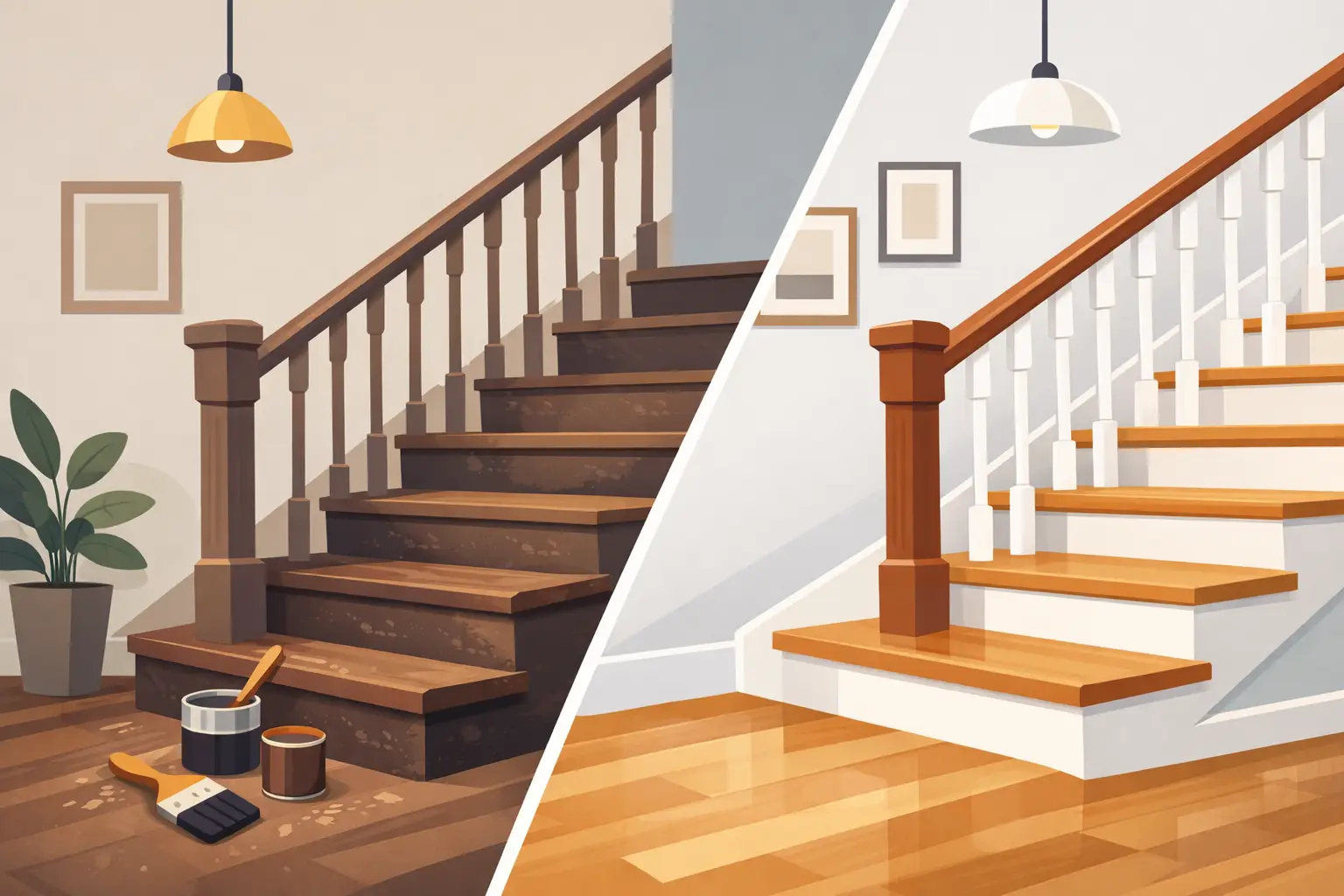
A staircase can make the entire house feel dated faster than almost any other wood feature. Homeowners often notice it when the treads are scratched, the finish has worn thin at the nose, or the color no longer works with the rest of the flooring. That is why staircase refinishing before and after is such a revealing comparison – the change is not just cosmetic, it can reset the feel of the entry, hallway, and main living space.
Unlike a standard floor, a staircase is experienced up close. You see the edges, the corners, the stain consistency, and the detail work every single day. If the finish is uneven or the wood is showing years of wear, it stands out. When refinished properly, the staircase looks intentional again, and the surrounding rooms benefit from that improvement.
What staircase refinishing before and after really shows
The biggest difference in staircase refinishing before and after is not simply that the wood looks newer. It is that the staircase starts to look integrated with the home instead of disconnected from it. In many homes, stairs were finished years before other updates took place. Cabinets changed, wall color changed, flooring changed, but the staircase stayed behind.
A proper refinishing project brings those elements back into alignment. That might mean removing a yellowed finish and replacing it with a more current natural tone. It might mean deepening the stain for a richer, more formal look. In some homes, it means correcting patchy wear patterns so each tread reads as part of one clean, cohesive run.
The before-and-after effect is usually strongest in three areas. First, the color becomes more balanced and intentional. Second, the sheen becomes more controlled, without dull spots or overly glossy sections. Third, the craftsmanship becomes visible in the details, especially around tread edges, risers, landings, and trim transitions.
Why staircases wear differently than wood floors
Stairs take concentrated traffic. Every foot lands in a smaller area, and that repeated impact shows up fast. The front edge of the tread often wears first, followed by the center path where the finish gradually thins. If pets use the stairs regularly, claw marks can add another layer of visible wear.
There is also a practical challenge that many homeowners do not think about until they see the results of a poor refinish job. Staircases have more angles, tighter working areas, and more visible vertical surfaces than open floor areas. That means refinishing stairs demands a different level of control. Sanding has to be precise. Stain application has to stay even from tread to tread. Finishing needs to account for durability without leaving heavy buildup on corners and edges.
This is one reason before-and-after photos can vary so much from project to project. A staircase refinished with care looks crisp and refined. A staircase refinished without that level of detail can still look slightly off, even with new stain and finish.
The process behind a high-quality transformation
A beautiful staircase does not start with stain color. It starts with preparation. The existing finish has to be removed thoroughly enough to create a clean, consistent surface. If old coatings remain in corners or along edges, the final color can turn uneven. If scratches are not addressed properly before finishing, they often become more noticeable after stain is applied.
For homeowners living in the home during the project, cleanliness matters just as much as appearance. Stair refinishing is close-quarters work in one of the most traveled parts of the house. A dust-controlled process makes a major difference in how manageable the project feels day to day, especially for families, pets, and anyone sensitive to mess.
Once the wood is properly prepared, stain selection becomes the design decision that shapes the after. Some homeowners want a close match to adjacent hardwood floors. Others want contrast, such as darker treads paired with painted risers. Neither approach is automatically better. It depends on the architecture of the home, the existing flooring, the amount of natural light, and how formal or casual the space should feel.
Then comes the protective finish. This is where durability and appearance have to work together. The right finish should stand up to regular traffic while preserving the look of the wood, not masking it. In active households, eco-friendly finishes with lower odor and faster return-to-use benefits can be especially appealing.
Design choices that affect the after
Some of the best staircase refinishing projects are dramatic. Others are subtle. Both can add value when the result fits the home.
If the staircase has good wood underneath but looks tired, a refinished natural or medium-tone wood surface can make the entire entry feel brighter and cleaner. If the house has more traditional finishes, a deeper stain can add warmth and definition. For homes with painted trim and a lighter coastal interior, a custom stain that avoids orange or red undertones often feels more current.
Risers also change the visual result more than many people expect. Refinishing only the treads creates one look. Combining wood treads with clean painted risers creates another. The balustrade, handrail, and newel posts may also need consideration. Sometimes they should be refinished to match. Sometimes leaving them as-is creates an awkward mismatch that weakens the final result.
This is where experienced guidance helps. The right recommendation is rarely based on trend alone. It should reflect the home’s style, the surrounding materials, and the level of maintenance the homeowner expects over time.
When refinishing is the right choice and when it is not
Refinishing is often the best option when the staircase is structurally sound and the wear is primarily in the finish, color, or surface appearance. Scratches, fading, minor surface damage, and outdated stain are all good candidates for refinishing. In these cases, the before-and-after improvement can be significant without changing the underlying staircase.
There are times, however, when more than refinishing is needed. If treads are severely damaged, if components are loose, if wood species do not match due to past repairs, or if the staircase was altered poorly over the years, replacement or partial rebuild work may make more sense. A trustworthy flooring professional should be clear about that.
For homeowners, this matters because the goal is not to force every project into a refinishing category. It is to choose the approach that gives the best long-term result. Sometimes that means restoring what is there. Sometimes it means combining refinishing with selective replacement for a cleaner final appearance.
What homeowners should expect during the project
The staircase sits in the middle of daily life, so communication and planning matter. Homeowners should know how access will work, how long each stage will take, and what to expect in terms of cure time and foot traffic. Projects feel smoother when the schedule is clear and the work area is kept orderly throughout the process.
This is where premium craftsmanship shows up beyond the finished wood. Clean containment, respectful in-home work habits, and consistent updates make a real difference. For many homeowners in Southwest Florida, the quality of the experience matters nearly as much as the final appearance. A well-run project protects both the home and the homeowner’s peace of mind.
Walnut Creek Wood Floors approaches staircase work with that mindset because the details matter from start to finish. The visible result matters, but so does how the work is performed inside a lived-in home.
The value of staircase refinishing before and after
A staircase is often one of the first architectural features people notice when they enter a home. When it is worn, the whole interior can feel less finished, even if the rooms around it have been updated. When it is professionally refinished, the effect reaches beyond the stairs themselves. The home feels more polished, more cohesive, and better cared for.
That is the real value in staircase refinishing before and after. It is not just about making old wood shiny again. It is about restoring a high-visibility part of the home with the level of craftsmanship it deserves.
If your stairs are showing wear, mismatched color, or an outdated finish, the right refinishing plan can change far more than one set of treads. It can bring the entire space back into balance and make the home feel finished in the way it should have all along.
Leave a Reply