
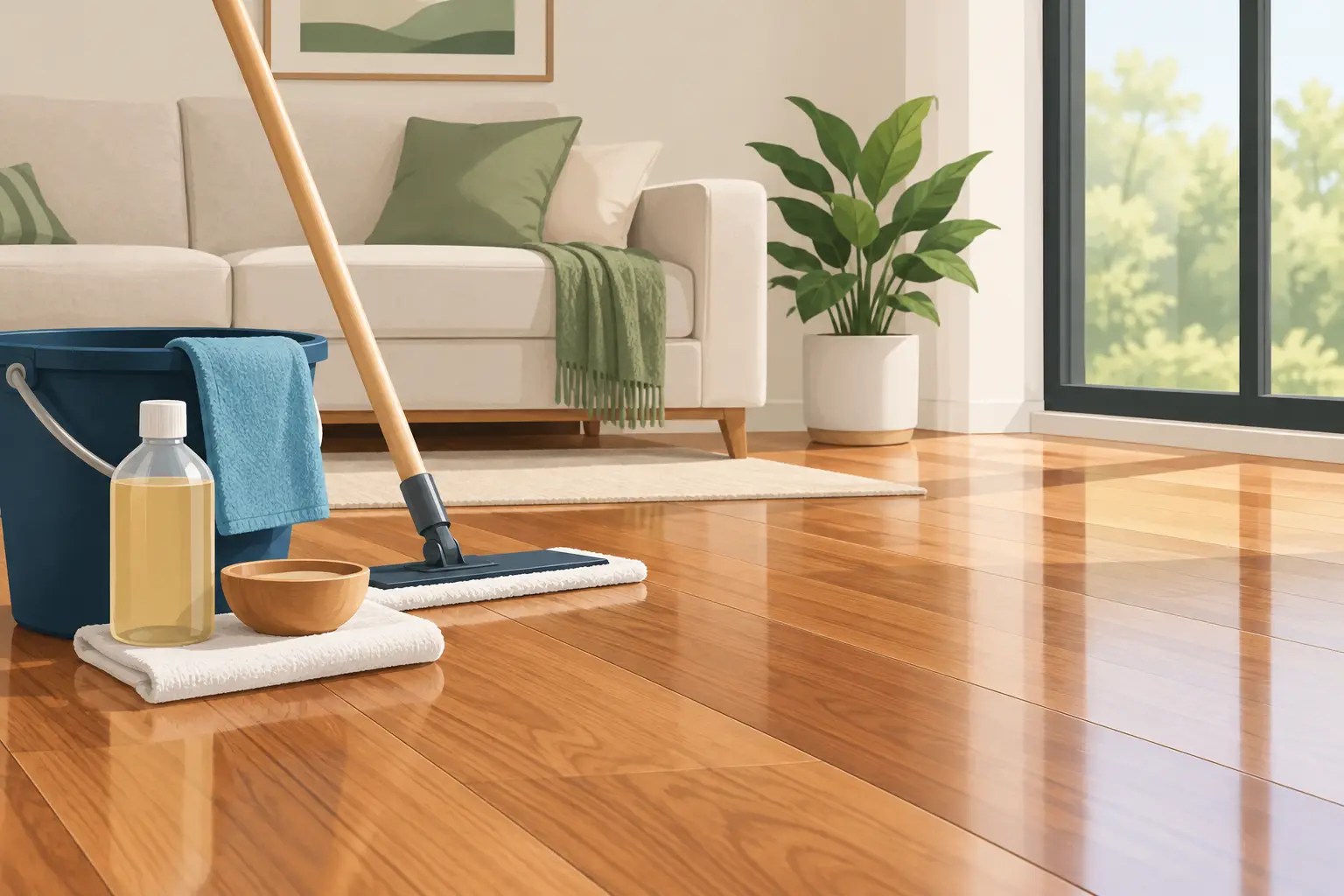
A beautiful hardwood floor does not usually fail all at once. It shows its age gradually: a dull traffic path near the kitchen, fine scratches by the entry, a cloudy spot below a pet bowl, or finish that feels less smooth than it once did. This wood floor finish maintenance guide is designed to help homeowners protect the finish that protects their investment, especially in Southwest Florida homes where sand, humidity, and daily indoor-outdoor living create extra wear.
The finish is not simply the shine on top of the wood. It is the durable protective layer between your floor and moisture, grit, shoes, furniture, and spills. Consistent care can keep that layer performing well for years. Waiting until bare wood is exposed can turn a straightforward maintenance project into a more involved refinishing job.
Start With the Finish You Have
Most modern hardwood floors are protected with a water-based or oil-based polyurethane finish. Both form a surface film that should be cleaned gently and kept free of abrasive debris. Water-based finishes often have a clear, natural appearance and lower odor during application. Oil-based finishes may bring out warmer amber tones as they age. In everyday maintenance, the routine is similar for both.
Some older floors have wax finishes, while certain engineered or prefinished products have manufacturer-specific coatings. These require more careful product selection. A cleaner or polish that works well on a polyurethane floor can leave residue, reduce adhesion for a future recoat, or create an uneven appearance on another finish type.
If you are not certain what is on your floor, avoid experimenting with waxes, acrylic polishes, or all-purpose cleaners. A flooring professional can identify the finish and recommend the appropriate care plan. That small step helps preserve both the appearance of the floor and your options for future restoration.
The Daily Habits That Protect a Wood Floor Finish
Most finish wear begins with grit. Fine sand and dirt act like sandpaper beneath shoes, socks, pet paws, and moving furniture. In Gulf Coast homes, that debris often travels in from patios, garages, pool areas, and entryways even when floors look clean at first glance.
Use a soft-bristle broom, dust mop, or vacuum made for hard surfaces several times a week. A vacuum with a beater bar can scratch or prematurely dull a wood floor, so choose a setting designed for hard flooring or turn the brush roll off. Frequent dry cleaning is one of the simplest ways to extend the life of a finish.
Place quality mats outside and inside exterior doors, but choose breathable rugs or rug pads that will not trap moisture against the wood. Rubber-backed mats and non-breathable plastic materials can discolor finishes or create moisture-related problems over time. Entry mats should be shaken out or vacuumed regularly, since a mat full of sand cannot protect the floor beneath it.
Furniture pads deserve the same attention. Felt protectors under chair legs, tables, and movable furnishings prevent the small drag marks that accumulate over the years. Check pads occasionally, as they collect grit and compress with use. When moving heavier pieces, lift them whenever possible rather than sliding them across the floor.
How to Clean Without Leaving Residue
For routine cleaning, begin with dry dust removal. Then use a lightly dampened microfiber mop and a hardwood-floor cleaner that is compatible with your specific finish. The mop should feel barely damp, not wet. Standing water is never appropriate for hardwood floors, and excessive moisture can work into seams, affect the wood, and weaken the finish over time.
Spray cleaner onto the mop pad rather than directly across a large area of flooring. Work in manageable sections and allow the surface to dry promptly. This approach gives you control over the amount of moisture used and helps prevent streaks.
Avoid steam mops, soaking wet mops, oil soaps, vinegar-and-water mixtures, ammonia, and household cleaners not made for finished wood. These methods are often suggested as inexpensive shortcuts, but they can leave buildup, dull the surface, or compromise the protective coating. Vinegar is acidic, and repeated use can be hard on certain finishes. More cleaner is not better, either. Excess product commonly causes the hazy film homeowners mistake for a damaged finish.
Respond Quickly to Spills and Pet Accidents
A water spill that is wiped up quickly is usually not a concern. The risk comes from moisture left in place long enough to penetrate gaps, edges, or worn areas. Blot liquids immediately with a soft, absorbent cloth, then clean the spot with an approved wood-floor product if needed.
Pet accidents require prompt attention because moisture and acidity can discolor both finish and wood. Wipe, clean, and dry the area without scrubbing aggressively. If a dark mark, odor, or raised grain remains after cleaning, the issue may have reached below the finish. Surface cleaners cannot correct that kind of damage, but targeted repair or refinishing may be possible.
Control the Conditions Around the Floor
Wood naturally responds to changes in humidity. It expands as humidity rises and contracts as air becomes drier. Southwest Florida’s humid climate, open doors, air conditioning cycles, and occasional storm-related moisture make steady indoor conditions particularly valuable.
Keep the home conditioned whenever possible and address leaks quickly around windows, appliances, exterior doors, and plumbing. Avoid leaving wet towels, pool gear, or damp shoes directly on hardwood. In homes with frequent patio or pool access, a washable entry runner and a clear habit of drying feet before coming inside can make a noticeable difference.
Sun exposure is another factor. Ultraviolet light can change the color of natural wood over time, sometimes more noticeably beneath rugs or furniture that remains in one place for years. Window treatments, UV-filtering film where appropriate, and occasional rearranging can help the floor age more evenly. Color change is a natural characteristic of hardwood, not necessarily a finish failure.
Know When Cleaning Is No Longer Enough
Regular cleaning preserves a finish, but it cannot rebuild a finish that has worn thin. Watch for dull areas that return soon after cleaning, scratches concentrated in traffic paths, a rough texture, or places where water no longer beads on the surface. These are signs the protective layer may be losing its integrity.
A professional maintenance coat, often called a screen and recoat, can be an excellent option when the existing finish is worn but the wood itself is still protected. The surface is carefully prepared, then a fresh coat of finish is applied to renew protection and improve appearance. It is generally less invasive than a full sand-and-refinish project, but it is not right for every floor.
Deep scratches, gray or black water marks, peeling finish, exposed wood, major color changes, or heavy wax and polish buildup may require more extensive work. In those cases, a professional assessment matters. Recoating over contamination or an incompatible product can lead to adhesion problems, so the best solution depends on the floor’s condition and finish history.
Do Not Wait for Bare Wood
The right time to evaluate maintenance is before bare wood appears. Once the finish is gone in a traffic lane, dirt and moisture can begin affecting the wood fibers themselves. A floor that might have benefited from a maintenance coat may then need sanding and refinishing to restore a uniform, durable surface.
Homeowners often worry that refinishing means weeks of disruption and dust throughout the house. Modern dust-free sanding systems can greatly improve the experience when full refinishing is needed. Careful preparation, containment, and communication are as important as the finish selection, particularly in an occupied home.
A Practical Seasonal Checkup
Every few months, take five minutes to inspect high-use areas in daylight. Look near exterior doors, kitchen work zones, dining chairs, hallways, stair treads, and pet feeding areas. Check whether furniture pads are intact, mats are clean and dry, and any small scratches are limited to the surface.
This simple inspection gives you a clearer picture than waiting for the entire floor to look worn. It also makes it easier to schedule professional care at the appropriate stage, preserving more of the original wood and avoiding unnecessary work.
Hardwood floors are meant to be lived on, not treated as museum pieces. With gentle cleaning, fast spill response, sensible protection at entrances, and timely professional maintenance, their character can deepen without sacrificing their durability. When your floor begins to signal that its finish needs more than routine care, Walnut Creek Wood Floors can help you choose the level of restoration that protects the craftsmanship already underfoot.
Leave a Reply