
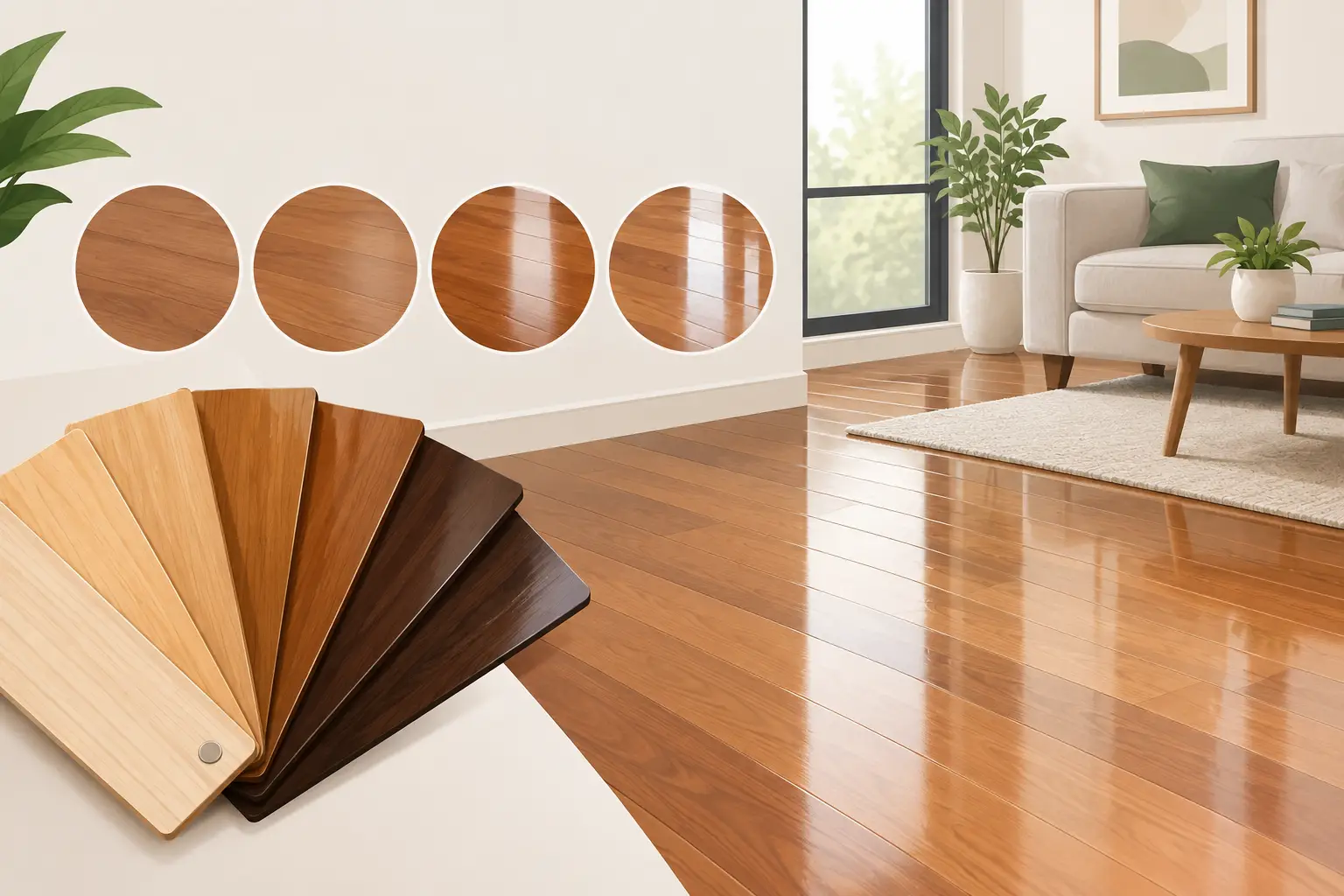
A floor can look entirely different after the final coat is applied. The stain may be exactly right, the wood may have beautiful grain, and the installation may be flawless – yet the wrong sheen can make the room feel brighter, flatter, more formal, or harder to maintain than expected. Knowing how to choose hardwood sheen helps you make that final design decision with confidence, before the finish becomes part of everyday life.
Sheen describes how much light a finished wood floor reflects. It is not simply a matter of choosing a shiny or non-shiny floor. The best choice depends on the amount of natural light in your home, the condition and character of the wood, how the room is used, and the level of upkeep you prefer.
Start With How You Want the Room to Feel
Hardwood sheen has a strong effect on a room’s overall character. Higher-sheen finishes reflect more light, giving floors a more polished, formal appearance. Lower-sheen finishes absorb more light and tend to feel softer, more relaxed, and more natural.
A glossy finish can make a dining room or carefully designed entry feel refined, particularly when the floor is smooth and the space receives balanced lighting. In a sunny Southwest Florida home, however, strong window light can create pronounced reflections. Those reflections may be beautiful, but they also call attention to dust, footprints, and the smallest surface marks.
Matte and satin finishes are often a better fit for open living spaces, bedrooms, and family areas. They allow the wood’s color and grain to remain the focus instead of turning the floor into a reflective surface. For homeowners renovating an older home, a lower sheen can also complement the natural variation and history in existing hardwood.
The Main Hardwood Sheen Options
Finish names vary somewhat by manufacturer, so it helps to compare actual samples rather than relying on a label alone. In general, these are the levels homeowners will encounter:
- Matte: Very low reflectivity with a natural, understated appearance. Matte is forgiving of dust and light surface wear, though it may not create the crisp, polished look some homeowners want.
- Satin: A soft, gentle glow that offers a balance between warmth and refinement. Satin is one of the most versatile choices for active households and is widely used in residential refinishing.
- Semi-gloss: Noticeably reflective and more formal. It can highlight a rich stain color and a smooth floor, but it also makes everyday debris, pet prints, and scratches easier to see.
- Gloss: Highly reflective and dramatic. Gloss is best reserved for homes or rooms where a statement finish is worth the additional cleaning and careful maintenance it requires.
For most households, satin sits in the practical middle. It has enough light reflection to look finished and elegant, without making every speck of dust visible by midafternoon.
How to Choose Hardwood Sheen for Daily Life
The room’s traffic level should influence the decision as much as its style. A low-traffic formal room can support semi-gloss or gloss more easily than a busy kitchen-adjacent living area. Children, pets, sandy shoes, and frequent entertaining do not make a high sheen impossible, but they do make its upkeep more noticeable.
Lower sheens are generally more forgiving because they diffuse light. This helps disguise fine scratches and ordinary signs of use between cleanings. That does not mean a matte floor is maintenance-free. Hardwood still benefits from regular sweeping or vacuuming with a floor-safe attachment, prompt cleanup of spills, and protective pads beneath furniture. It simply means the finish is less likely to spotlight minor imperfections.
Consider how your household actually uses the home. A family that values a pristine, reflective floor and maintains it often may be happy with semi-gloss. A homeowner who wants a beautifully finished floor that can live comfortably with a dog, guests, and daily routines may prefer satin or matte.
Look at Natural Light Before Selecting a Finish
Sheen should never be selected under a single showroom light. A finish sample can appear subtle indoors and become much more reflective near a large window or sliding glass door. This is especially relevant in Gulf Coast homes, where bright daylight can move across floors throughout the day.
Take samples into the rooms where the work will be completed. View them in morning light, afternoon light, and evening artificial light. Look at the sample from standing height as well as close up. A floor is experienced across an entire room, not from a small swatch held at eye level.
Dark stains and higher sheens can be particularly demanding in bright spaces. The combination creates contrast, which makes dust, pet hair, and surface marks more visible. A lighter or medium stain with a satin finish is often easier to live with while still providing depth and warmth.
Let the Wood’s Condition Guide the Decision
Newly installed hardwood offers a relatively clean canvas. If the boards are carefully installed, sanded flat, and stained evenly, you have more flexibility to choose a reflective finish. Even then, wood is a natural material. Grain patterns, mineral streaks, and subtle color changes are part of its appeal, and sheen will influence how strongly those details appear.
Older floors deserve a more tailored approach. Refinishing can restore remarkable beauty, but historic boards may have slight variations in plane, repaired areas, nail holes, or distinctive grain. A matte or satin finish often celebrates that character while keeping the finished result cohesive. A higher sheen may emphasize every contour and repair, which can be desirable in some homes but should be an intentional choice.
The species also matters. Oak has an expressive grain that looks excellent under most sheen levels. Maple’s smoother, tighter grain can show marks and uneven reflection more readily with a glossier finish. Hickory’s variation can look especially rich under satin, while walnut often benefits from a finish that adds depth without creating excessive glare.
Do Not Confuse Sheen With Finish Quality
A higher sheen does not automatically mean a more durable floor, and a matte finish is not automatically more protective. Durability depends on the quality of the coating system, careful surface preparation, the number of properly applied coats, cure time, and how the floor is maintained.
This distinction matters during a refinishing project. Beautiful results begin with meticulous sanding and a clean surface. If dust or residue remains before finishing, it can affect the appearance of any sheen level. Professional dust-free sanding helps keep the work area cleaner and supports the careful preparation needed for an even finish, while low-VOC and eco-friendly finish options can be especially welcome in occupied homes.
Ask to see finish samples on your actual wood whenever possible. A sample board is useful, but a test area on the floor provides a more accurate view of the stain, grain, room lighting, and final sheen working together.
Consider Stairs and Connected Rooms
Staircases experience concentrated wear and are viewed from many angles, so sheen deserves special attention there. A satin or matte finish is often a practical choice for treads because it is less likely to reveal scuffs and fine scratches. If the stairs connect to a more formal room with semi-gloss floors, the finish can still be coordinated without necessarily matching every reflective detail exactly.
In open-concept homes, consistency usually creates the most intentional result. Using one sheen across connected hardwood areas allows the floor to read as a continuous architectural element. A different sheen may make sense when a separate room has a distinct purpose, lighting condition, or design style, but it should look deliberate rather than accidental.
Make the Final Choice From Real Samples
Before approving a sheen, place full-size samples where you can see them under your home’s real conditions. Compare them beside cabinetry, wall color, rugs, and furnishings. Notice what happens when sunlight enters the room and when lamps are on at night.
At Walnut Creek Wood Floors, finish recommendations are approached as part of the full flooring design, not as an afterthought. The right answer is rarely the glossiest or most popular option. It is the sheen that complements the wood, fits the way your household lives, and continues to look well cared for long after the project is complete.
Choose the finish that lets you enjoy your floor rather than constantly inspect it. When craftsmanship, color, and sheen are working together, the result feels right every time you walk into the room.
Leave a Reply