
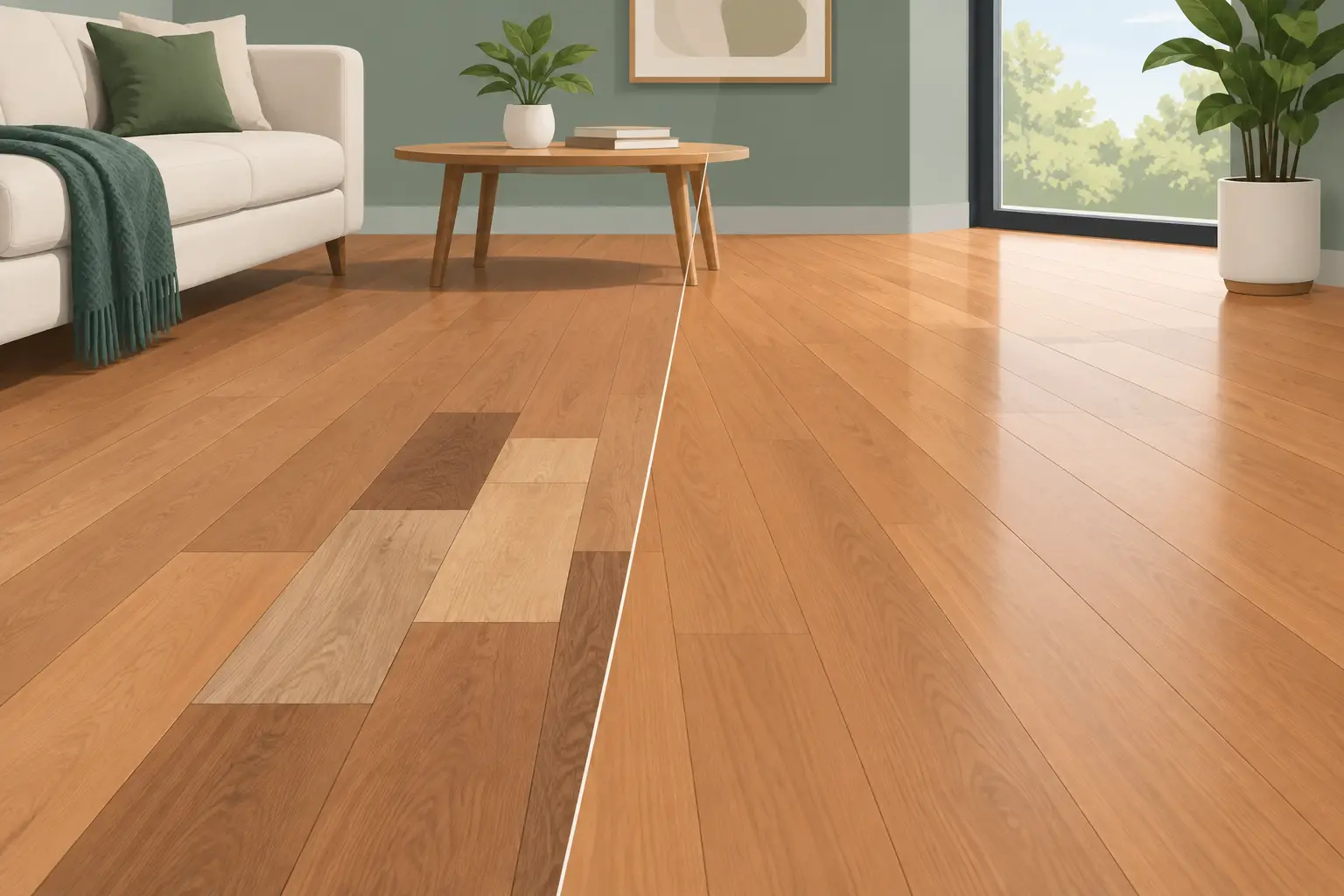
A new floor can look beautiful on its own and still feel out of place beside an existing one. Matching hardwood floors is less about finding boards with a similar brown tone and more about understanding the details that give a floor its character: wood species, grain pattern, board width, age, stain, sheen, and the light in the room.
For homeowners renovating one room, opening a floor plan, repairing water damage, or refinishing a staircase, the goal is usually not perfection in a showroom sample. It is a transition that feels intentional once furniture is back in place and daily life resumes. That requires careful evaluation before a single board is installed or sanded.
Why Matching Hardwood Floors Is So Complex
Wood is a natural material, which is exactly why it has depth and warmth that manufactured surfaces struggle to duplicate. It is also why two floors labeled with the same species and stain can look noticeably different. Red oak, white oak, maple, hickory, and walnut each absorb color differently. Even boards from the same species can vary based on grade, cut, age, and where they came from in the tree.
Existing floors have another variable: time. Sun exposure, foot traffic, cleaning products, and previous finish coats all affect color. A floor that began as a pale natural oak may have warmed over decades, while the area beneath a rug or inside a closet remains closer to its original shade. New wood often appears lighter or cleaner beside it at first.
The finish also changes what the eye sees. A satin finish can soften color variation, while a glossier finish reflects more light and can make a near-match appear different from one angle to another. This is why selecting flooring based on a small sample alone can lead to disappointment. A sample should be considered in the home, against the existing floor, in both daylight and evening light.
Start With an Honest Assessment of the Existing Floor
Before choosing new material, a flooring professional should examine the original floor closely. Identifying the species is the first step, but it is not the only one. Board width, thickness, edge profile, installation direction, and the condition of the existing finish all matter.
A narrow-strip red oak floor from an older home has a different visual rhythm than wide-plank white oak, even if both are stained a similar medium brown. Likewise, a floor with square edges will not blend naturally with a new product that has a pronounced beveled edge. The goal is to avoid a visible line at the doorway that makes each room feel like a separate project.
It is also essential to determine whether the existing floor can be refinished. Solid hardwood can often be sanded and refinished several times during its life, depending on its remaining wear layer and prior work. Engineered hardwood requires a more cautious evaluation because the thickness of the top veneer varies by product. A professional inspection helps establish which options are realistic without risking the original floor.
When the Exact Product Is Still Available
If the original flooring manufacturer, species, width, and grade are known, an exact material match may be possible. That is the simplest starting point, but it does not guarantee an exact visual match. New boards will still have fresh color and may respond differently to stain than aged boards.
In this situation, refinishing the new and existing floor together can create a much more unified result. Sanding removes the old finish and surface discoloration from the existing floor, giving both areas a more consistent starting point. A custom stain and finish can then be applied across the connected spaces.
This approach is especially effective when a homeowner is extending hardwood into an adjacent room, replacing a damaged section, or removing a wall between two spaces. The larger the continuous area, the more valuable it becomes to treat the floor as one design surface rather than separate old and new sections.
When an Exact Match Is Not Possible
Many homeowners do not know the original product, and older materials may no longer be manufactured. That does not mean the project has to look patched together. It simply means the strategy should shift from exact duplication to thoughtful blending.
A skilled flooring team may source unfinished material that closely matches the existing species, width, and grain character. Unfinished wood provides more control because the floor can be custom stained after installation. This is often a better option than trying to force a prefinished product into a color match that is only close under store lighting.
Sometimes the most convincing choice is to embrace a planned transition. For example, hardwood may run continuously through main living areas while a new room uses a complementary plank width or a carefully selected contrasting tone. The key is making the change occur at a natural architectural break, such as a doorway, hall opening, or transition strip, rather than in the middle of an open room.
Refinishing Both Areas Often Delivers the Best Blend
For connected rooms, refinishing the original and new flooring together is usually the strongest path to a cohesive appearance. It allows the floor to be leveled visually, removes many years of color change, and gives the stain a more consistent canvas.
There are limits. Wood that has aged naturally may retain some variation even after sanding, and certain species take stain unevenly. That variation is not necessarily a flaw. In a well-executed project, it reads as the natural character of real hardwood rather than a mismatch.
Custom stain work is especially valuable when matching hardwood floors with warm amber tones, gray-brown finishes, or deeper colors. The right process includes creating test areas on the actual wood, allowing the stain to dry, and viewing it under the home’s lighting. A color that looks right in a sample board can shift significantly once it is applied across a full room.
Finish selection matters just as much as stain selection. Satin is a popular choice for active households because it offers an elegant, low-reflective appearance while helping minimize the visibility of everyday marks. Matte finishes can create a softer, more contemporary look, though they should be selected with the wood species and overall design in mind. The right finish should complement the home, not chase a trend that may feel dated in a few years.
Do Not Overlook Staircases and Thresholds
Staircases are often the point where a flooring match either succeeds or becomes obvious. Treads, risers, nosings, handrails, and nearby flooring all interact visually. If new hardwood is being installed beside an existing staircase, refinishing the staircase at the same time can make the entire transition feel deliberate.
Thresholds deserve the same attention. A poorly chosen transition piece can interrupt an otherwise well-matched floor. Whenever possible, the transition should be clean, proportionate, and aligned with the architecture of the opening. Small details like this are a major part of high-end execution.
Plan for a Clean, Controlled Project
Matching work often involves sanding existing floors, installing unfinished wood, staining, and applying protective finish. That makes containment and jobsite organization important, particularly in occupied homes. Homeowners should know what rooms will be inaccessible, how furniture will be handled, and how long the floor will need to cure before rugs and regular use can resume.
Dust-free sanding systems make a meaningful difference during refinishing by capturing dust at the source rather than allowing it to travel through the home. No system eliminates every trace of dust, but professional containment, careful preparation, and thorough cleanup greatly reduce disruption. Low-odor, eco-friendly finish options can also be valuable for households that want a cleaner in-home experience.
Clear communication is part of craftsmanship. A reliable flooring specialist should explain the matching strategy, identify where variation may remain, provide realistic timing, and confirm the final stain and sheen before the full application begins. Surprises are far less likely when expectations are set early.
The Best Match Is One That Belongs in the Home
A successful hardwood floor match does not always mean every board looks identical. Real wood has variation, and older homes often have stories written into their floors. The better standard is whether the new work respects those details and creates a result that feels balanced, durable, and appropriate to the space.
At Walnut Creek Wood Floors, that means looking beyond a color swatch to consider the whole floor, from the grain beneath your feet to the staircase that connects the rooms. With careful material selection, custom finishing, and meticulous preparation, an addition or repair can feel like it has always belonged in your home.
Leave a Reply