
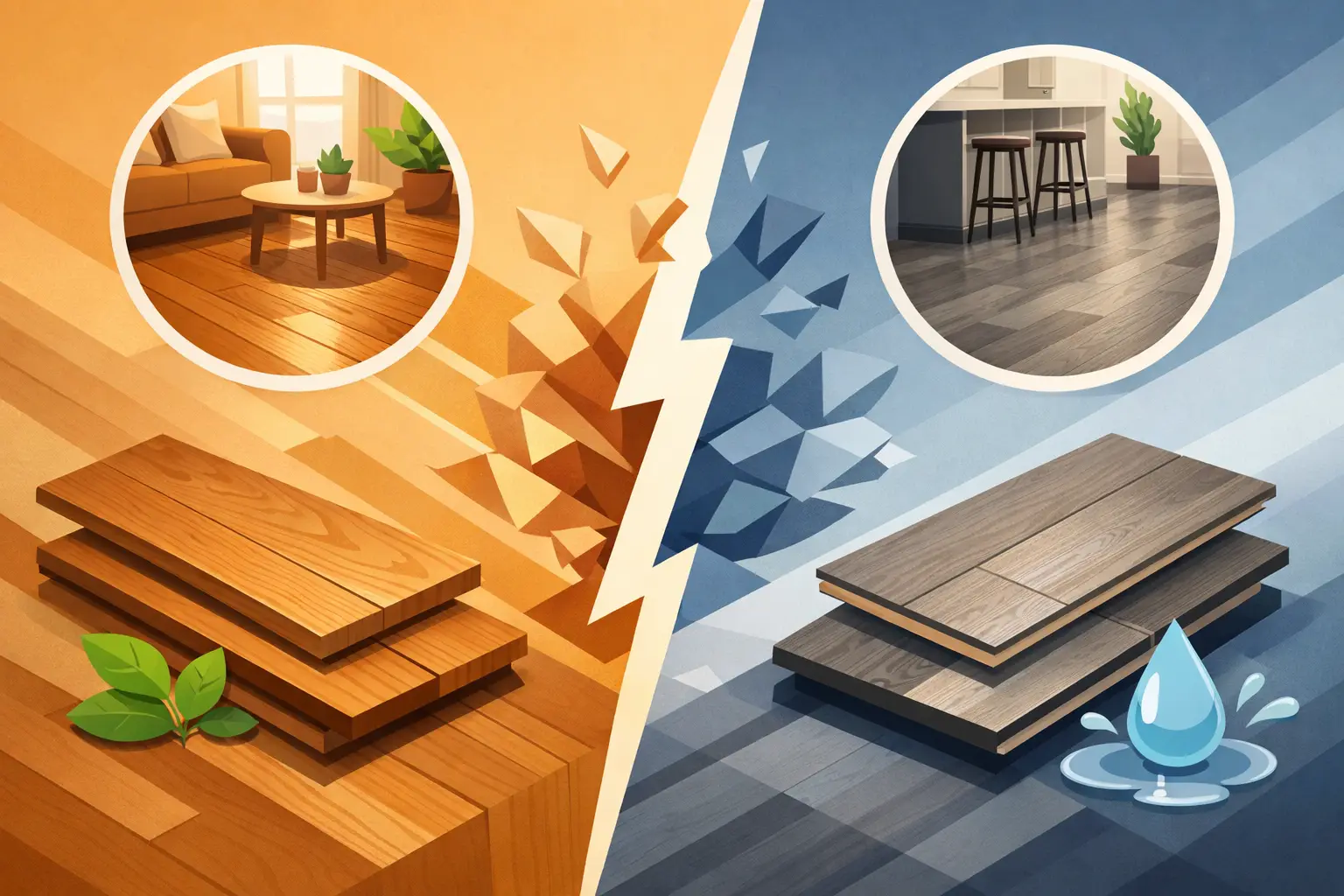
A floor can look excellent in a showroom and still be the wrong choice for the way your home is used. When comparing hardwood floors vs luxury vinyl, Southwest Florida homeowners need to consider more than color and initial price. Humidity, sand, pets, active families, water exposure, resale plans, and the character of the home all shape the better investment.
Luxury vinyl has earned its popularity for good reasons. It is durable, water-resistant, and available in remarkably convincing wood looks. Yet genuine hardwood offers a depth, warmth, and lasting value that a printed surface cannot fully duplicate. The right answer depends on where the flooring will be installed and what you expect from it over the years.
Hardwood Floors vs Luxury Vinyl at a Glance
Hardwood is a natural material with real grain variation, texture, and the ability to be refinished. Each board contributes to a floor that feels individual rather than repeated. It is a long-term finish for living spaces, bedrooms, dining rooms, and homes where owners want enduring character and the option to update the color later.
Luxury vinyl plank, often called LVP, is a manufactured flooring product built in layers. Its protective wear layer sits over a photographic wood pattern, with a rigid or flexible core beneath it. Quality LVP can be comfortable underfoot, easy to maintain, and highly practical in spaces where moisture is an everyday concern.
Neither material is automatically superior. A well-installed hardwood floor can elevate an entire home, while a thoughtfully selected luxury vinyl floor can be a sensible choice for a busy room. Problems usually arise when a product is chosen for the wrong environment or installed without proper preparation.
Appearance: Real Character or Consistent Convenience?
Hardwood has a visual quality that comes from being real wood. Light catches its grain differently from board to board. Natural knots, mineral streaks, and color shifts create movement that gives a room dimension. Over time, wood also develops a patina, becoming part of the home rather than simply a surface placed over it.
Luxury vinyl offers a more controlled appearance. That can be helpful when a homeowner wants a uniform color and fewer natural variations. Premium products have improved substantially, including embossed textures and wider plank designs. Still, repeated pattern boards and a less dimensional surface may become more noticeable in large, open spaces.
For a formal living area, staircase, dining room, or carefully designed primary suite, hardwood typically delivers the more refined result. For a laundry room, guest bath, or casual secondary space, luxury vinyl may provide the look you want with fewer worries about occasional spills.
Moisture and Humidity Matter in Florida Homes
This is where the decision requires real nuance. Luxury vinyl is generally the safer material where standing water, frequent splashes, or wet shoes are expected. It is a strong candidate for bathrooms, laundry rooms, mudroom-style entries, and some ground-level areas where moisture management is a continuing concern.
Hardwood is not a waterproof floor, and it should not be treated like one. Water left on a wood floor can lead to cupping, staining, or movement at the joints. However, that does not mean wood is unsuitable for Florida homes. Proper acclimation, correct subfloor preparation, stable interior humidity, and professional installation all make a meaningful difference.
In air-conditioned living areas with sensible care, hardwood can perform beautifully for decades. The key is respecting wood as a natural material. A leaking dishwasher, an open window during a storm, or a wet mop routine deserves prompt attention. Homeowners who want real wood throughout their main living spaces often find that this level of care is entirely manageable.
Durability Is More Than Scratch Resistance
Luxury vinyl is often marketed as scratch-proof, but no floor is truly immune to damage. Heavy furniture, sharp objects, pet claws, and dragged appliances can still mark or dent vinyl. Its wear layer can protect the decorative surface for years, yet once the surface is deeply damaged, repair options are limited. A damaged plank may need to be replaced, and matching the original product later is not always easy.
Hardwood can scratch and dent, particularly softer species or dark stain colors that make marks more visible. But hardwood has a major advantage: it is repairable. Many scratches can be touched up, localized damage can sometimes be addressed, and a worn floor can be sanded and refinished instead of removed.
That difference changes the long-term equation. A hardwood floor may show life, especially in an active household, but it can also be restored. With professional refinishing, homeowners can refresh the finish, change the stain color, or correct years of wear while keeping the floor they already love.
Installation and Cleanliness During the Project
Luxury vinyl installation can be relatively fast, depending on the product and condition of the subfloor. Some products float over an existing surface, while others are glued down. That convenience is appealing when a renovation schedule is tight. But speed should not replace preparation. Uneven subfloors, moisture issues, and transitions to adjacent rooms can affect both the appearance and performance of the finished floor.
Hardwood installation is more involved because the material must be evaluated and acclimated for the home. The subfloor needs careful attention, boards require precise layout, and finishing work demands a high level of skill. On a refinishing project, the sanding process is equally important. Professional dust-free sanding technology helps contain airborne dust and keeps the home cleaner and more comfortable while work is underway.
For homeowners living in the home during a project, process matters. Clear communication, organized work areas, protection for surrounding spaces, and a clean finish are part of quality craftsmanship, not optional extras.
Cost: Initial Price vs Long-Term Value
Luxury vinyl usually costs less upfront than a premium hardwood installation, though high-end LVP products and extensive subfloor repairs can narrow the gap. It can be a practical choice when covering a large area on a fixed budget or when a room’s moisture exposure makes hardwood a poor fit.
Hardwood is generally a larger initial investment. The cost reflects the material, skilled installation, site conditions, and finishing process. In return, homeowners receive a genuine architectural feature that can contribute to perceived home value and remain serviceable for generations.
The best comparison is not simply the price per square foot. Consider how long you expect to live in the home, whether you may refinish in the future, and how the floor supports the overall quality of the property. For a long-term residence or a higher-end renovation, hardwood often justifies its investment because it can be renewed rather than replaced.
Comfort, Sound, and Everyday Living
Both flooring types are easy to clean with regular sweeping or vacuuming and a manufacturer-approved cleaning method. Avoid soaking either material, especially at seams and edges. Felt pads under furniture and entry mats near exterior doors will protect both hardwood and luxury vinyl from grit and wear.
Underfoot, hardwood feels solid, warm, and substantial. It also tends to create a more authentic acoustic quality in a room. Luxury vinyl can be softer and quieter, particularly when installed with an attached pad, although the result depends on the product and the subfloor beneath it.
For families with pets and children, the better choice often comes down to the household’s priorities. If quick cleanup and water resistance lead the list, luxury vinyl is compelling. If the family values natural materials, lasting beauty, and the ability to renew the floor after years of use, hardwood remains hard to match.
Where Each Flooring Type Makes Sense
Hardwood is especially well suited to living rooms, dining rooms, bedrooms, hallways, upstairs spaces, and staircases. These are areas where its character is visible every day and where water exposure is usually limited. It is also an excellent choice for restoring older homes, where matching or renewing existing wood floors preserves the home’s original appeal.
Luxury vinyl makes practical sense in bathrooms, laundry rooms, utility areas, and locations that regularly encounter water. It can also work well in rental properties or homes where minimizing immediate costs and maintenance concerns is the primary goal.
Some homes benefit from using both. Hardwood can establish a cohesive, elevated look through the main living areas, while luxury vinyl serves high-moisture rooms where water resistance carries more weight. The transition should be planned carefully so the home still feels intentional and well finished.
Choose the Floor That Fits the Home You Have
The best flooring decision is rarely about following a trend. It is about choosing a material that suits the room, the household, and the standard you want for your home. Luxury vinyl offers practical protection where moisture and easy maintenance matter most. Hardwood brings a level of authenticity, repairability, and lasting craftsmanship that continues to reward homeowners long after installation.
If real wood is the direction that fits your space, the details deserve as much consideration as the species or stain color. Thoughtful planning and skilled execution are what allow a hardwood floor to look beautiful on day one and continue looking at home for years to come.
Leave a Reply