
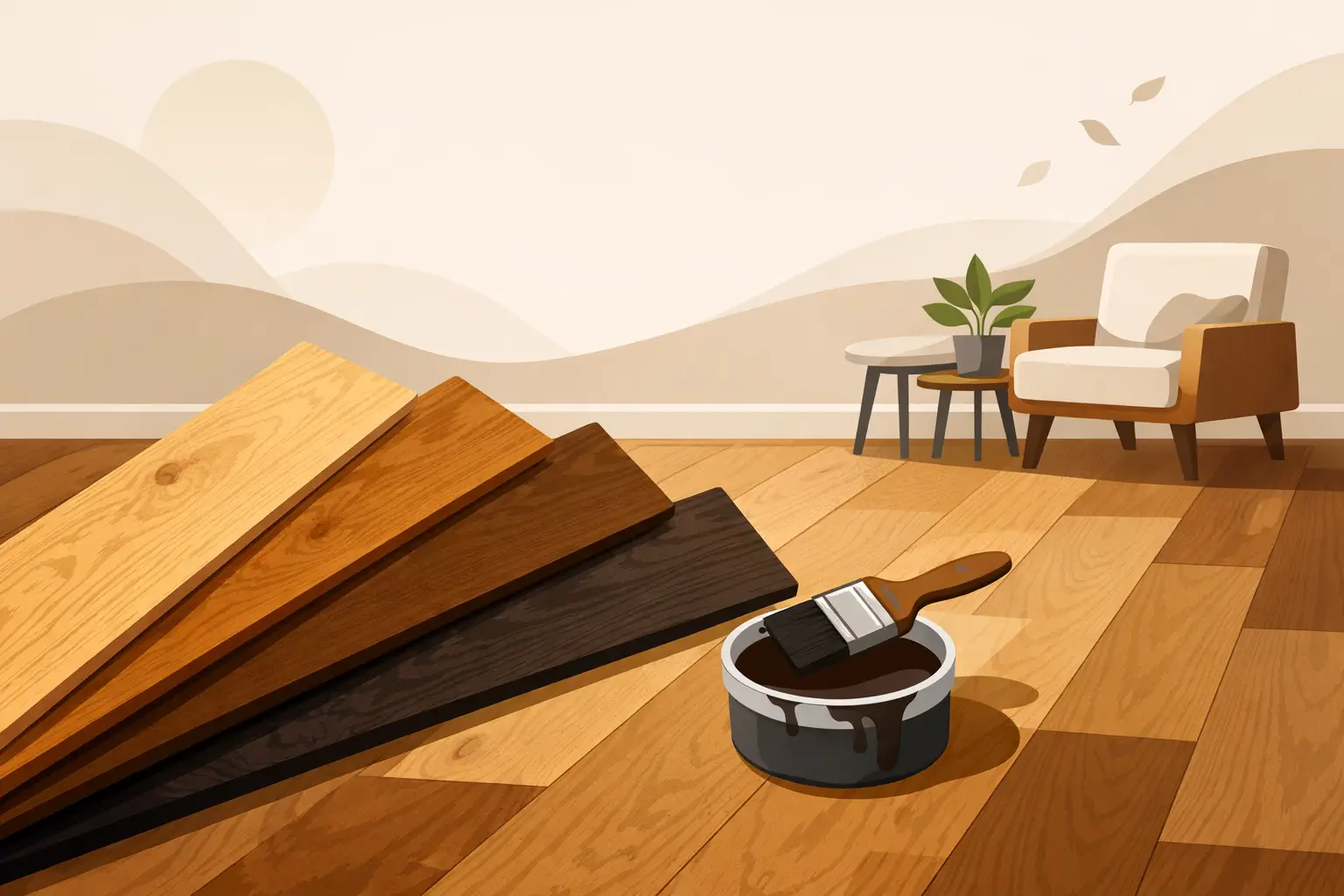
Oak has earned its place in American homes because it is durable, repairable, and full of character. Its pronounced grain also means stain color is never a simple paint-chip decision. The best stain colors for oak work with the wood’s natural variation rather than trying to conceal it, creating a floor that feels intentional from every angle and in every kind of light.
For homeowners planning a refinishing project, the goal is usually not to chase a short-lived trend. It is to choose a color that complements the home’s architecture, furnishings, and natural light while allowing the craftsmanship of the oak to remain visible. The right process starts with the wood itself.
Start With the Type and Condition of Your Oak
Red oak and white oak can take the same stain very differently. Red oak has a more open grain and naturally warm undertones that may show pink, amber, or red beneath certain colors. White oak is generally denser and more neutral, often with subtle gray, tan, or olive undertones. Neither is better. They simply need different approaches.
Existing floors add another consideration. Older oak may have areas of sun fading, repairs, water marks, or boards from different installation periods. Professional sanding removes the existing finish and levels the surface, but it cannot make naturally varied boards identical. A well-chosen stain treats that variation as part of a genuine wood floor, not a flaw to be covered.
Before committing to a color, ask for stain samples directly on your floor after sanding. Samples should be viewed in daylight, evening light, and beside your cabinetry, wall color, and trim. A color that looks balanced in a small sample may feel much warmer or darker across an entire room.
Best Stain Colors for Oak by Design Direction
Natural and clear finishes
A clear or lightly toned finish is one of the most enduring choices for both red and white oak. It preserves the grain, keeps rooms bright, and gives the floor a clean, tailored appearance. On white oak, a natural finish often creates a soft wheat or light beige effect. On red oak, it usually brings forward the wood’s traditional warmth.
This choice suits coastal, transitional, traditional, and contemporary homes, especially where the flooring should support the overall design instead of becoming the room’s dominant feature. In Southwest Florida homes with abundant sunlight, natural oak can also make a space feel open and grounded. The trade-off is that its warm undertones remain visible. If the goal is a distinctly gray or cool-toned floor, clear finish alone will not deliver that look.
Warm medium brown
Medium brown stains are often the most forgiving option for oak. They add richness without making the room feel heavy, and they help blend mild color variation between boards. Think balanced brown with a touch of walnut, chestnut, or caramel rather than orange or very dark espresso.
This is a particularly strong choice for homeowners who want a classic floor that works with cream cabinetry, warm white walls, leather furniture, and traditional millwork. It also performs well in active households because small scratches and everyday dust tend to be less obvious than they are on very dark or very pale floors.
On red oak, medium brown can soften the natural red cast while retaining warmth. On white oak, it creates depth and a more formal appearance. The exact result depends on the stain system and the floor’s sanding preparation, which is why on-floor samples matter.
Neutral greige and light taupe
Greige and taupe tones remain popular because they bridge warm and cool design elements. They can complement white cabinetry, brushed nickel, black accents, natural stone, and soft modern furnishings without making the floor look stark.
These colors are often more successful on white oak, which begins with a more neutral base. Red oak can achieve a muted, modern effect as well, but it may require careful color balancing to prevent warm undertones from reading through unevenly. A skilled refinishing team can adjust the approach, but homeowners should be realistic: oak grain will still show, and that is part of its appeal.
Choose a lighter greige when the home has limited natural light or several smaller rooms. A deeper taupe can bring definition to an open floor plan while still avoiding the maintenance demands of nearly black stain.
Weathered brown and soft smoked tones
For a relaxed, coastal-inspired finish, weathered brown and soft smoked colors offer more dimension than a flat gray stain. These tones typically combine brown, gray, and muted beige influences, so they feel established rather than overly trendy.
They pair well with linen upholstery, pale walls, warm metals, and natural textures. In homes near the Gulf Coast, a weathered oak floor can complement the light without turning the space into a themed beach interior. The key is restraint. Extremely gray stains can make oak appear dull or emphasize unexpected undertones, particularly on red oak.
A smoked tone is best evaluated in the home’s actual lighting. Bright Florida sun can make a subtle gray cast appear much cooler during the day, while warm interior lighting may pull the floor back toward brown at night.
Dark walnut and espresso-inspired brown
Deep brown stains create contrast, elegance, and a more formal visual anchor. Dark walnut is generally more flexible than pure espresso because it retains some warmth and allows a little grain to remain visible. It can be striking against light walls, white trim, and open spaces with substantial natural light.
Dark floors do come with practical trade-offs. They show dust, pet hair, footprints, and light scratches more readily than medium tones. They can also make a smaller or lower-light room feel more enclosed. For a home that receives daily family activity, a rich medium-dark walnut often gives the desired depth with less day-to-day frustration.
If you love a dark floor, consider the finish sheen as carefully as the stain. A matte or satin finish is usually more forgiving than high gloss, which reflects light and can highlight surface marks.
Color Choices That Need Extra Care
Very light Scandinavian-style oak, strong gray, and near-black stains can all look beautiful, but they are less forgiving. Pale floors may show dark knots, old repairs, and debris. Cool gray stains can conflict with red oak’s undertones. Near-black finishes may obscure the grain that made oak desirable in the first place.
That does not mean these colors are off the table. It means they deserve larger samples, a conversation about maintenance, and an honest assessment of the existing floor. A custom stain blend can often create a more refined version of an inspiration photo than a single, off-the-shelf color.
Stain Is Only Part of the Finished Look
The same stain can look dramatically different under a matte, satin, semi-gloss, or gloss finish. For most homes, matte and satin finishes provide the best balance of natural beauty and practical upkeep. They soften reflections, allow the grain to take center stage, and help conceal minor wear between cleanings.
The sanding process matters just as much. Uneven sanding can cause stain to absorb inconsistently, creating blotches or visible lap marks. Careful preparation, clean edging, and controlled application are what make a custom color look polished across a full room, hallway, or staircase. At Walnut Creek Wood Floors, that attention to preparation is central to a finish that looks considered rather than merely changed.
Consider your surrounding materials as well. Honey-toned cabinets may make a cool floor feel disconnected, while crisp white cabinetry can make a warm oak floor look richer. Tile transitions, stair treads, built-ins, and adjoining rooms should be reviewed before the final color is selected. A beautiful floor should connect the home, not compete with it.
A Better Way to Make the Final Choice
Narrow your choices to three directions: one close to the wood’s natural character, one medium tone, and one bolder option. View each sample at different times of day and place rugs, cabinet samples, and furniture swatches nearby. Then consider how you live in the space, not only how the color photographs.
The strongest oak floor colors usually feel right quietly. They show the wood, suit the home, and continue looking good after the excitement of a renovation has passed. With thoughtful sampling and meticulous refinishing, oak can carry a color with lasting warmth, depth, and character.
Leave a Reply